
Bridge Orange County’s Modern Chain to the Early Books
Work backward from the most recent deed. Record the grantee on that deed. Then look for the same person as grantor on the next transfer out. Each step should capture the recording date, deed type, book and page or instrument number. Add parties, legal description, and map reference. Keep going only while the parcel identity stays intact. Name variants, married names, and trusts can all break a clean chain. So can estates, corporate names, and parent parcels.
Orange County property records reach well past the modern digital window. The earliest deed and mortgage books date to 1703. The county's grantor and grantee index runs from 1910 through 1977. FamilySearch offers another path into the older volumes. A directory or newspaper may tie a person to an address. The deed, probate file, or tax record still supplies the legal role. Note any gap where an image is missing, a parcel was subdivided, or a map reference is unresolved. Also note gaps where an estate transfer cannot be linked.
The Clerk's Historical Documents and Resources page introduces the early holdings.
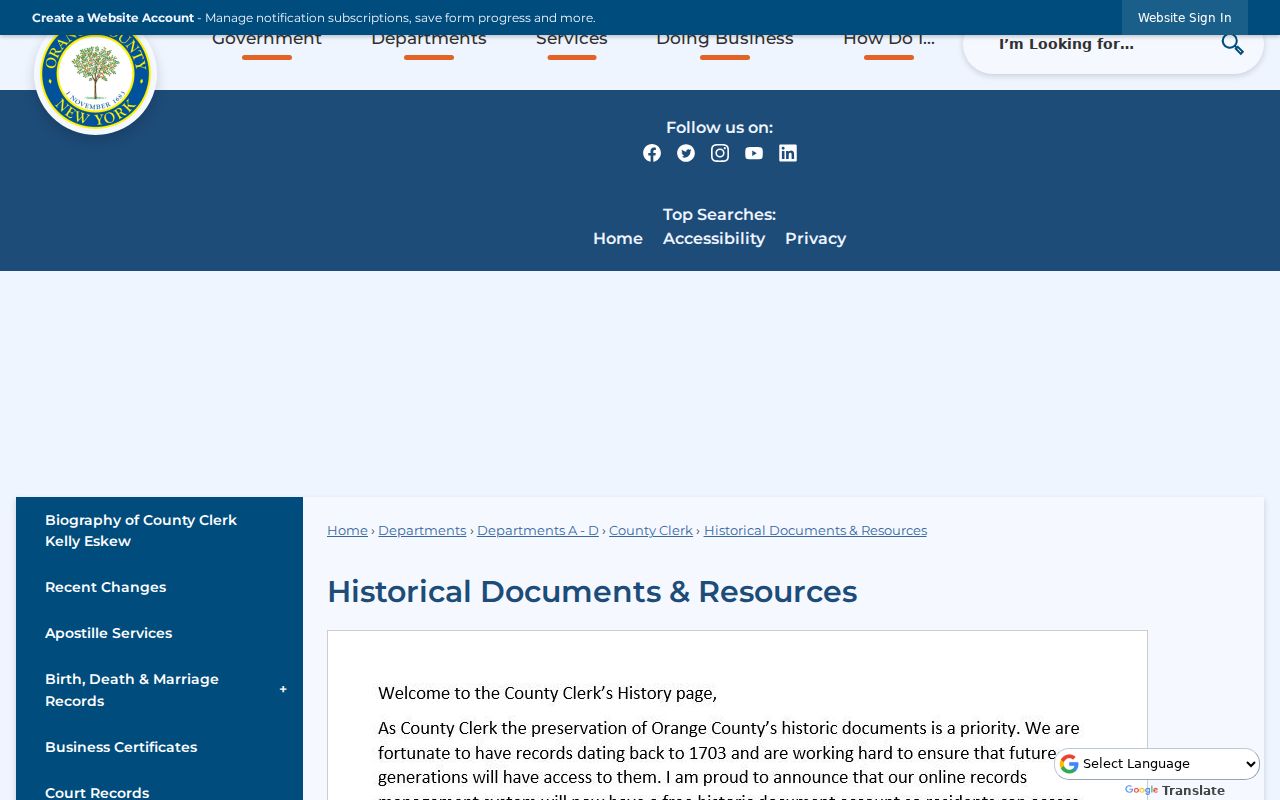
The capture marks the handoff from online searching to historic images and record-room research.
Build an Orange County Deed Chain Backward
Begin with the latest deed tied to the subject parcel. Its grantee is your current link; its grantor is the next former owner to chase. Search that grantor as a grantee in an earlier period. Open the acquiring instrument, and repeat the climb. Each row in the working chain should carry the transfer date, grantor, grantee, deed type, book and page or instrument number, legal-description clue, and map reference. Stay disciplined about parcel identity. Repeat the process only while the description still points to the same land.
| Chain Step | Grantor to Grantee | Record | Identity Check |
|---|---|---|---|
| Current transfer | Newest located parties | IQS image and index | SBL, legal description, map |
| Prior acquisition | Current grantor as earlier grantee | Earlier deed | Same lot or traced parent parcel |
| Subdivision bridge | Developer or parent owner to lot grantee | Deed plus filed map | Lot, block, and map reference |
| Historic bridge | Earlier indexed parties | Deed book, probate, or tax clue | Metes and bounds and adjoining owners |
Keep this a research timeline, not a title abstract. Mortgages, discharges, liens, powers of attorney, and easements add context without adding a former owner. File them separately so the transfer chain stays readable.
How Far Back Orange County Former Owners Can Be Traced
The Clerk's IQS help describes different windows for different material. Modern land-record searching starts in 1953, with back-scanning continuing. A grantor and grantee index covers 1910 through 1977. Deed images cover parts of 1947 through 1978. The county's historical resources route searchers to FamilySearch. They also point to early deed and mortgage books reaching back to 1703. One caution applies throughout: an index year does not guarantee a downloadable image.
When the online chain stops, keep the last book, page, and image number. Also keep party spellings and the date range. Check adjacent image pages for continuations or marginal notes. The County Clerk record room can supply inspection or copy access. Orange County Genealogical Society directories and archive collections can suggest address associations. Treat those clues as clues. A person belongs in the chain only after a dated source connects them to the land. That source must be a deed, probate record, or dated tax record.
Parcel Splits, Maps, and Broken Orange County Chains
A clean sequence often breaks apart. Parent tracts become subdivision lots, lots merge, streets get renumbered, and land changes municipality. Follow the map references inside the deed. Compare them against County Clerk map holdings and the GIS parcel identity. Middletown's Stub Street subdivision and lot-line-change material shows the pattern well: city approval is a lead, the filed map defines the recorded event, and later assessment or deed records reveal whether new parcel identities took hold.
For the Port Jervis annexation involving former Deerpark parcel 57-3-2, build a crosswalk from the old SBL to the annexation description, the later city identifier, and the first record using the new identity. Searching only the current number can make the chain look artificially short. Describe the result accurately. It is an identifier change after annexation, not a duplicate property.
Names, Estates, and Entities in Former Owner Research
Search spelling variants, initials, married names, trustees, estate representatives, and exact entity names. The New York business database can confirm an entity's official name and filing history. A service address reveals nothing about its members. Surrogate's Court may show authority to convey property after a death. The later deed shows whether a conveyance was actually recorded. Keep sensitive family material out of the final chain unless it explains a transfer.
Know when to stop. Label the gap when an image is unavailable, a legal description shifts to an untraced parent parcel, a trust or estate cannot be connected, or a sealed record blocks the next step. A stated stopping rule makes former-owner research reproducible. It also tells the next researcher exactly which book, map, court file, or date range still needs work.
Tracing Former Owners of a Orange County Property
| Source | Years It Covers | Where Held | What It Shows |
|---|
Walking the Orange County Deed Chain Backward
- Grantor / grantee
- Chain of title
- Legal description
How Far Back Orange County Ownership Records Go
Lawful use.
Report the Earliest Located Orange County Owner Carefully
"Earliest located" means the first owner supported by completed research. It does not mean the first person ever to hold the land. State the final book, page, index, probate, or tax source and its date. Be candid about limits. If the chain shifts to a parent tract or an unreadable image, describe that stopping point. Then name the next record required. That wording preserves the historical value of the work without erasing an unresolved earlier period.
Preserve Former-Owner Name Variants
Record the index spelling, the deed spelling, initials, entity suffix, trustee capacity, and any documented name change. Search the variants widely, but connect them only through deed descriptions, dates, and map references. Similar names alone cannot bridge an Orange County chain.