
Orange County IQS Coverage Is a Search Map, Not the Deed
The Orange County Clerk keeps the land records. IQS is the Clerk's public search doorway for deeds, mortgages, powers of attorney, maps, and related filings. Modern land-record coverage starts in 1953. Back-scanning continues to add older pages. A grantor and grantee index spans 1910 through 1977, and deed images survive for parts of 1947 through 1978. Earlier deeds reach back to 1703. Earlier material sits with FamilySearch and the courthouse, while coverage differs by record type, so note the index range and image availability shown for your exact search.
A careful abstract records the recording date, instrument type, grantor, grantee, book and page or instrument number, any consideration stated, the legal description, and map references. Book and page identify a source, not a substitute for the page itself. Note any easement or exception language. A faint scan changes the plan. Inspect adjacent pages and request a clerk copy rather than guessing at names or boundary text.
The official Orange County IQS help page details the coverage.
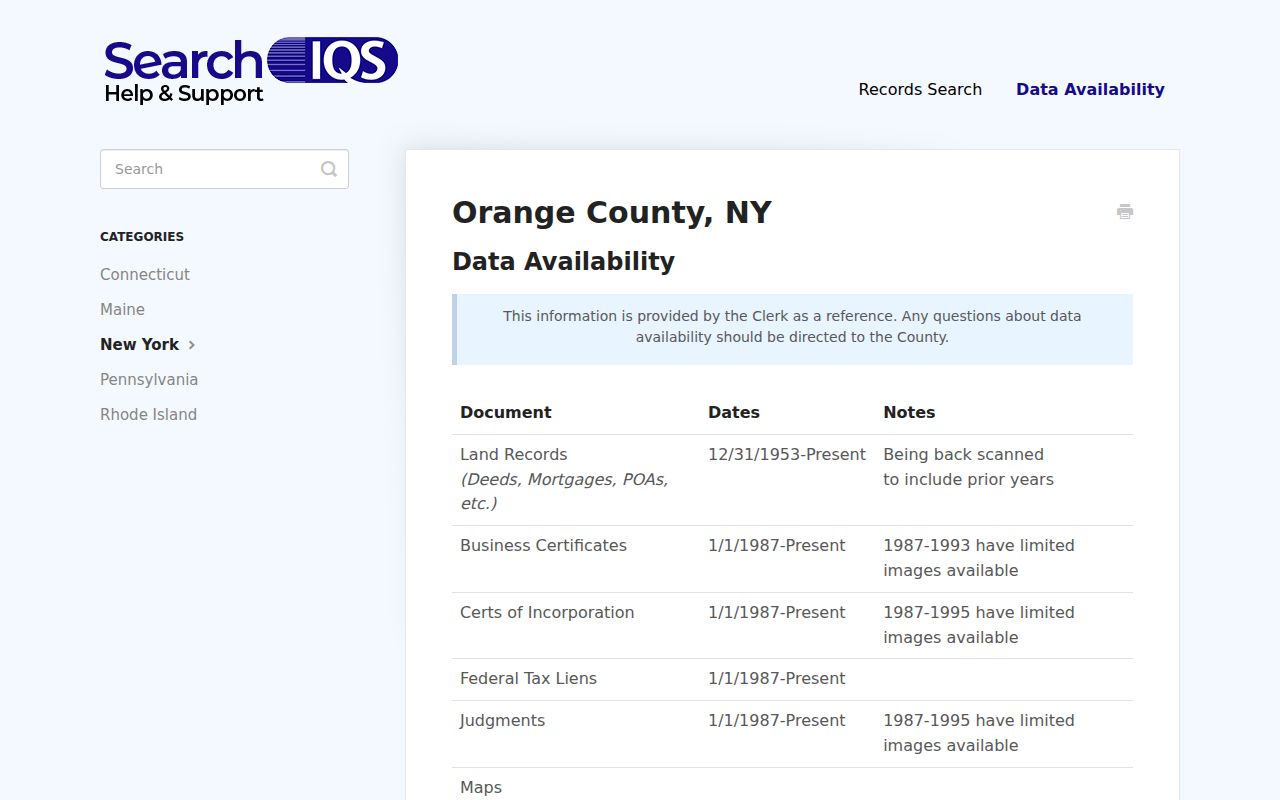
Index years and image years are not the same. The Clerk's deed-recording instructions also identify the required state forms and the deed-fraud-letter charge.
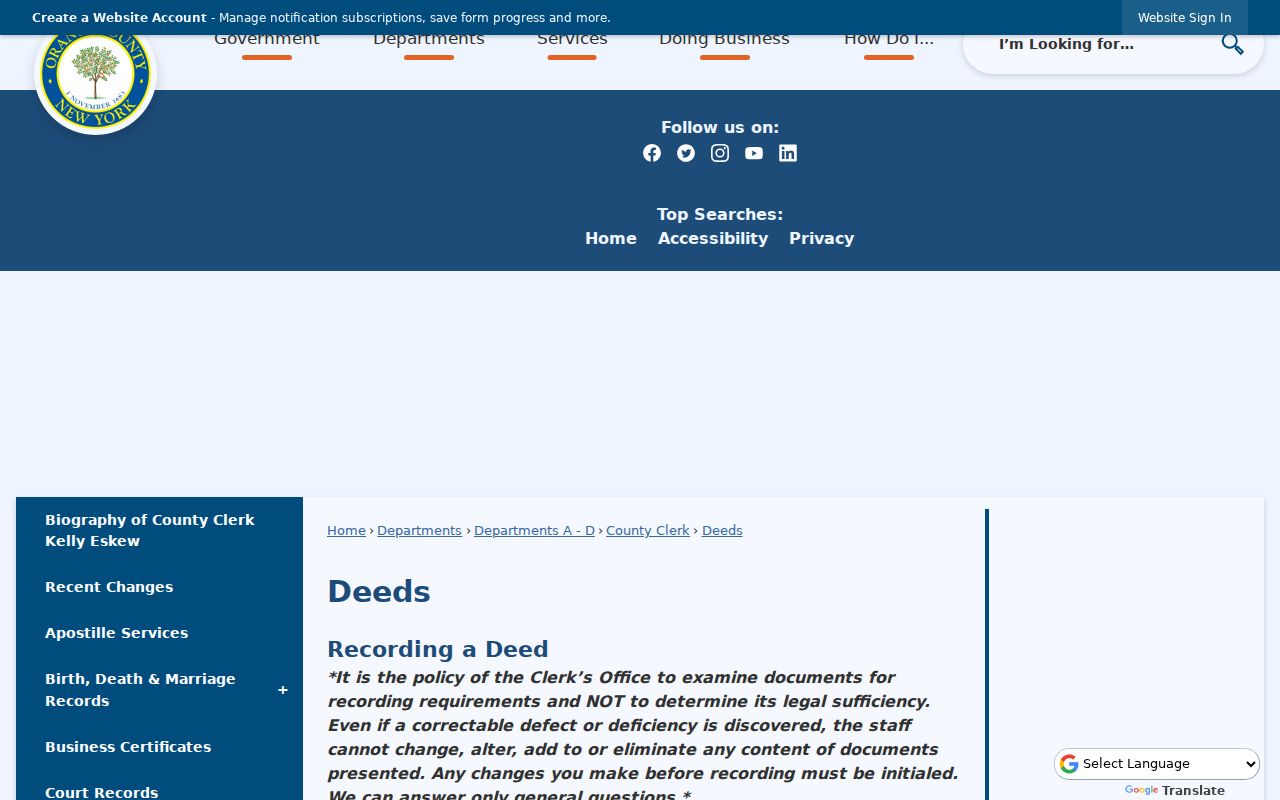
Recording requirements and fees are clerical matters. They do not decide legal sufficiency. When a subdivision, merger, or annexation changes an SBL, the number-only trail can go cold. Search by party and date instead. Follow every filed-map reference, and compare the legal description against both the old and new parcel identities. Port Jervis annexation work shows why: the geometry and description can bridge a former Deerpark number to a later city parcel after a number-only search stalls.
Types of Orange County Deeds and Instruments
A document's label organizes a search. It does not settle legal effect by itself. A deed conveys an interest, while a mortgage secures debt. A discharge clears a recorded mortgage, a power of attorney supplies authority, and a filed map can explain parcel identity.
| Deed | Grantor, grantee, recording data, consideration, and land description | Read image and referenced schedules |
| Mortgage or discharge | Loan and release context | Do not count as an ownership transfer |
| Executor or trustee deed | Representative conveyance | Check authority and exact capacity |
| Tax deed | Transfer following the applicable process | Confirm final deed, not an auction list |
| Filed map | Lots, blocks, roads, and map references | Bridge parent and child parcels |
Search Orange County Deed Records Step by Step
Start from a parcel-card deed clue. A known party and date works too. Search both sides of a name, because today's grantee may have been yesterday's grantor. Open the image, copy the instrument number or book and page, and compare the legal description with the SBL and the map.
- Normalize names and preserve entity suffixes and spelling variants.
- Limit dates only after checking for delayed recording.
- Read every page, exhibit, exception, and map reference.
- Request a certified copy when formal proof is required.
Missing images send you to the Clerk's record room. Recording staff and the county fee schedule handle submissions and copies. Portal access never guarantees every historical page is downloadable.
Orange County Historic Deeds Before the Modern Index
Older deeds live on a different shelf. FamilySearch and courthouse holdings carry Orange County deed and mortgage material back to 1703. An online index covers 1910 through 1977, with partial image windows. Save your last modern reference before stepping back. That tie keeps the old book on the same tract.
Directories, newspapers, probate files, and old tax rolls can suggest a likely party or address. Deeds and probate authority still establish the property role. For faint scans, keep uncertain text in brackets. Check adjacent images, and order a clerk copy rather than guessing.
Legal Descriptions and Changed Orange County SBLs
An SBL is an assessment key. It helps you search. But the deed description and its referenced map carry the recorded land identity. Subdivision, merger, lot-line adjustment, annexation, and renumbering can break a number-only chain, so follow the parent description and filed map into the later parcel.
Port Jervis parcel 57-3-2 shows the annexation crosswalk. It bridges a Deerpark identity into city records. Middletown's Stub Street material traces the route from planning approval to filed map to later assessment entries, and in both cases a proposal is not an active parcel until the recorded and assessment evidence supports it.
Copies, Fees, and Limits of Orange County Deed Research
Orange County's deed instructions call for state forms, parties, a legal description, payment, and recording requirements. They also mention a deed-fraud-letter charge. Fees and submission rules change. Rely on the current Clerk page, not an old screenshot. A downloaded image aids research, while a certified copy serves a different evidentiary need.
No index search guarantees clear title. Unrecorded interests, errors, easements, judgments, estate issues, and description problems may call for a title professional or an attorney. Report the latest deed you reached, not "the last possible deed." State any access or image gap plainly.
Orange County Deed Records and What They Show
| Deed Type | What It Does | Common Use |
|---|
The Orange County Grantor-Grantee Index
- Grantor
- Grantee
- Chain of title
- Book/Page vs Instrument #
Getting a Copy of a Orange County Deed
Recorded, not guaranteed.
Audit an Orange County Deed Image Before Citing It
Read the whole deed image with care. Confirm the deed type, the execution and recording dates, the exact names, signer capacities, the acknowledgment, consideration language, legal description, exhibits, tax-map clues. Check every cited map too. Look at the next image if the description runs on. Marginal notes, easements, exceptions, and reservations still matter even when the names look plain.
Set the deed beside Beacon and ParcelViewer. The SBL works as a search key. The deed description stands as recorded land evidence. If acreage, lot, municipality, or adjoining-owner calls differ, keep the discrepancy open. Trace the parent deed and filed map instead of forcing the deed into the current polygon.
In a chain of title, give the reason each link holds. A shared surname proves little. Description, map, prior reference, and party sequence should carry the weight. Where the evidence runs out, name the last book and page on file. Name the exact record-room request that comes next.
Connect Orange County Deeds with Related Filings
Once you spot a transfer, search the same parties and parcel period for mortgages, assignments, discharges, liens, powers of attorney, and maps. Those filings can explain a signer's authority, the financing behind a sale, or a referenced subdivision. Keep them out of the owner chain anyway. For an LLC, match the exact grantee name against the state entity record. For an estate, check the representative capacity in Surrogate's Court and look for any executor deed.
Date every source you use. A later discharge never changes the earlier grantee. A lien claimant is not an owner. Clear role labels keep the deed history accurate.
A final deed note should say exactly what you cited: an index line, a downloaded image, a record-room copy, or a certified copy. It should also preserve every access limitation that applied.