
Define What “Owns” Means Before Naming an Orange County Owner
Orange County keeps several names for one property. The assessment card shows an assessment owner. A deed names the recorded grantee. A tax bill adds a taxpayer, and a permit names an applicant or permit holder. They can point to one party but are not interchangeable, so a defensible answer to who owns a property names the role, record date, parcel, municipality, and source instead of turning every name into an ownership claim.
Start with the parcel system. Pull the current owner field and the deed reference, then locate the newest deed in IQS. Check the legal description and parcel identifiers. When the grantee is an LLC or corporation, the New York Department of State entity database shows the legal name, status, organization date, county, service address, registered agent, and filing history. A named agent is not the beneficial owner. Estate questions may call for a dated Surrogate's Court record plus a later deed.
The county's Online Records page explains the IQS connection.
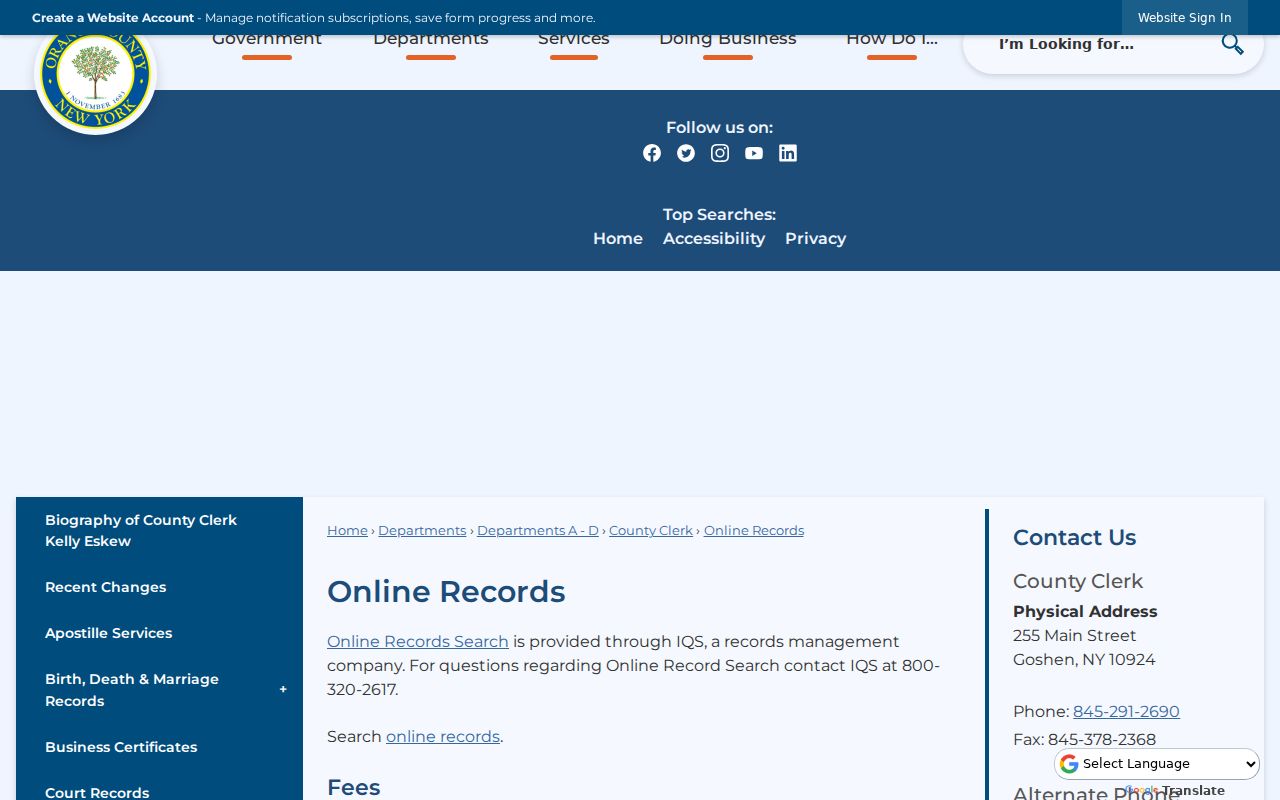
The official page pairs assessment names with recorded deeds.
Use a Three-Source Orange County Ownership Method
A solid Orange County ownership answer rests on a dated assessment result, the latest deed or index entry, the parcel identifier, the legal municipality, and a note on how current the portal is. The GIS map confirms which mapped parcel is under discussion. A tax bill can add the taxpayer and billing status. Payment, though, does not convey title.
- Find the parcel by address and save its SBL, municipality, and assessment owner.
- Search IQS for the deed reference and newest grantee tied to the same description.
- Compare dates and label each name by its record role.
- Investigate entity or estate records only when the recorded name requires it.
Missing deed images call for careful wording. Report the assessment owner as shown. Avoid any categorical ownership claim until the deed itself is on the table, and if the latest deed predates the assessment record, state both dates rather than implying that no later event exists.
Owner, Taxpayer, Applicant, and Occupant Are Different
| Source | Name Role | What It Supports |
|---|---|---|
| Assessment roll | Assessment owner | Dated owner field used in parcel administration |
| County Clerk deed | Recorded grantee | Recorded conveyance and vesting language |
| Tax bill | Taxpayer or bill addressee | Billing and payment context |
| Planning or permit file | Applicant or permit holder | Who filed or received an approval |
| Directory | Address association | A dated clue, not title proof |
Clear labels prevent lazy ownership claims. A mailing address proves nothing about residence. Public records rarely expose every beneficial interest behind a trust or company, so a careful Orange County parcel search names each role honestly instead of guessing.
Research an Orange County LLC or Estate Owner
An LLC or estate owner needs a second look. The New York Department of State business database gives the exact name, type, organization date, jurisdiction, county, service address, registered agent, status, and filing history. Normalize the grantee name first. Then return to the deed for signer capacity, mortgages, assignments, liens, and discharges. The registered agent is not the owner.
Probate adds another layer. Orange County Surrogate's Court may show probate or administration authority for a deceased grantee, which you match against any executor's deed and the later assessment name. Courts sit outside FOIL and follow their own procedures, so publish only the facts needed for the parcel chronology and none of the sensitive family details.
Resolve Orange County Ownership Gaps Without Guessing
Ownership gaps are common. A freshly recorded deed may not appear on the tax roll yet. Newburgh updates can lag. A parent parcel may split into new lots, an annexed Port Jervis tract may gain a new identifier, a trust or estate name may change, and an index image may simply be unavailable. Compare dates, map references, and parcel keys.
Stop when the chain runs out of support. A good finding names the last verified assessment owner, the latest located grantee, the missing record, and the next custodian to contact. It does not infer beneficial ownership, occupancy, or residence. New York confidentiality programs and redaction rules are strong reasons never to reverse-engineer or publish a protected address.
How to Find Who Owns a Orange County Property
Where Orange County Owner Information Comes From
| Source | Owner Info It Gives | Access |
|---|
What "Who Owns This Property" Cannot Tell You
Lawful use.
Write a Defensible Orange County Owner Finding
Structure makes a finding defensible. Open with address, municipality, SBL, and date. State the assessment owner exactly as displayed, then the latest located grantee with the deed date, recording reference, and whether the legal description matched. If the names differ, explain the timing or the unresolved gap instead of silently choosing one.
Add supporting roles only as needed. A tax bill identifies a taxpayer, a business filing normalizes an entity, probate establishes authority, and planning material names an applicant. None of them is an owner. Mailing and service addresses prove no residence.
Close with the limits. The search is not a title examination, may miss beneficial or unrecorded interests, and gains strength from a certified copy, a parent map, a clerk search, or a court record.
Protect Privacy in an Orange County Owner Search
A public deed or parcel name is not a license. It does not justify publishing unrelated personal data. Leave out dates of birth, signatures, family relationships, private phone numbers, and unnecessary court details. New York's Address Confidentiality Program and confidential voter rules are explicit reasons. Never reconstruct a protected location through linked records.
Keep the focus on property evidence. Parcel identifiers, the legal municipality, the assessment name, the recorded grantee, the instrument date, and the source currency each carry weight. Together they supply the answer. If contact is genuinely needed for a property matter, use the public mailing field with care. Never describe it as a residence. Harassment and targeting are off limits in any Orange County property records search.