
Orange County Tax Research Follows the Levy
Tax research in Orange County follows the levy. Town, county, school, village, and special-district processes each keep their own records, and the county collection calendar shows who issues a bill and when unpaid amounts are re-levied. The three cities are different. Orange County does not collect their city taxes, so Middletown, Newburgh, and Port Jervis each require a city-specific route. A bill is a dated billing record. It is not proof of title.
For every result, record the bill year, bill number, parcel or SBL, municipality, owner or taxpayer label, assessed value, exemptions, levy, due date, payment status, penalty, and collector. Middletown's BAS and mytaxbill interfaces provide owner, property, bill, and bill-type paths. Newburgh starts with the SBL. Port Jervis supplies bill-copy guidance and school-district routes. A delinquency or auction notice is not final. The listed parcel may be redeemed, withdrawn, or sold on a later date, so its status needs a second check.
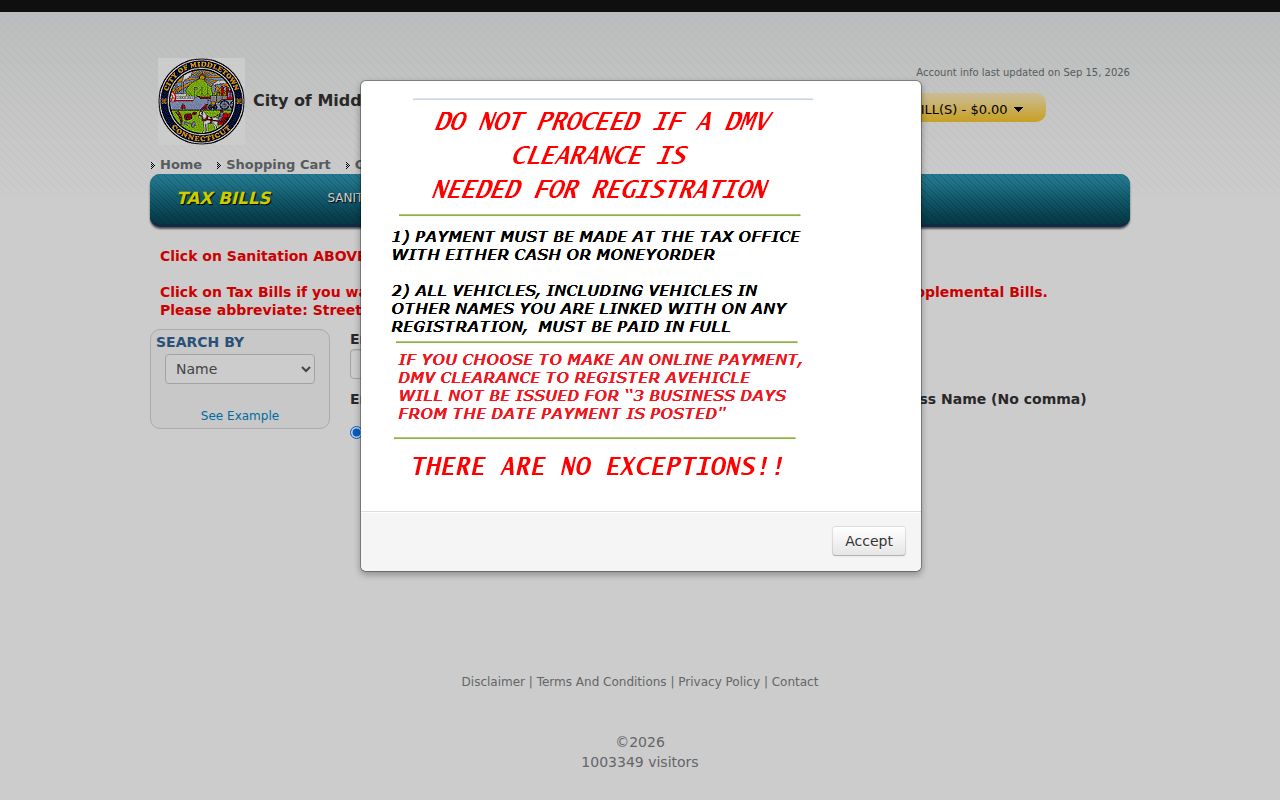
The Middletown city-tax search displays the owner, property, bill, and bill-type filters available on that page.
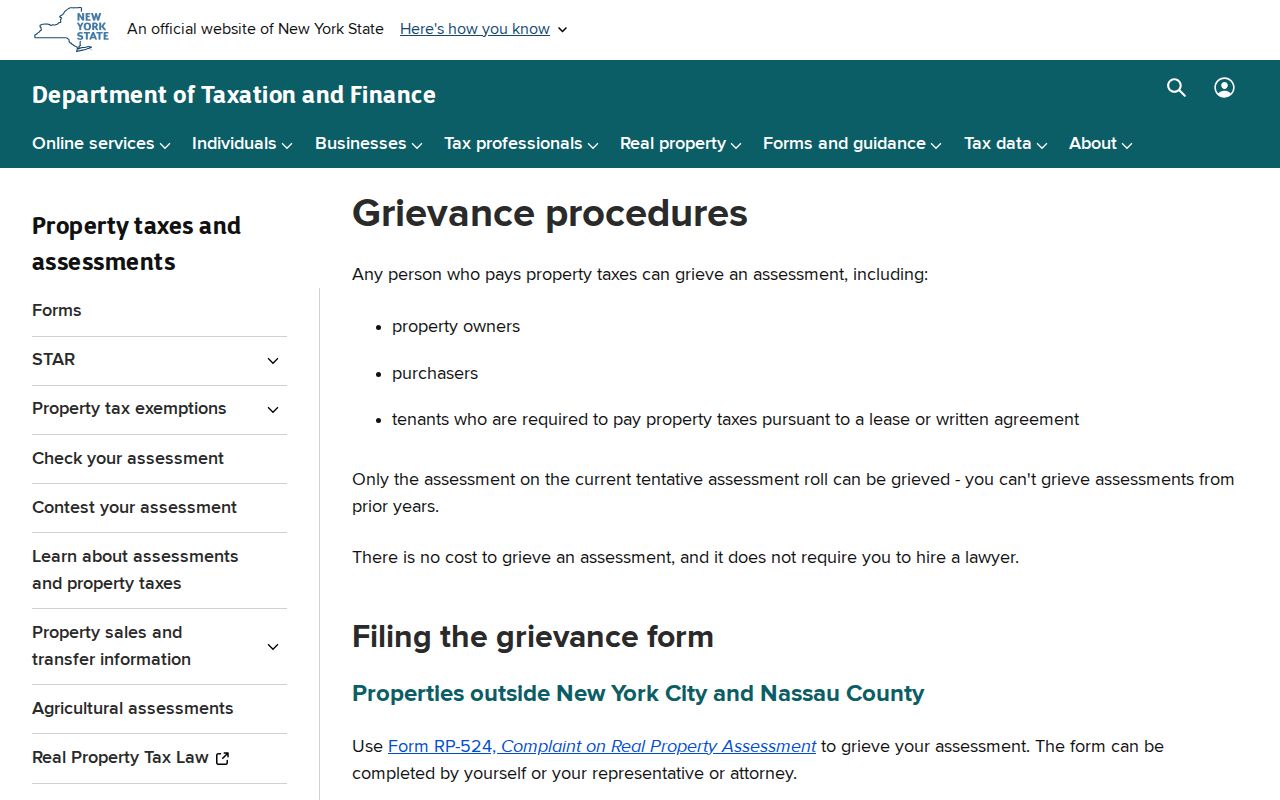
Municipality and bill type belong with every tax result. Pairing them wrong leads to the wrong levy. New York's grievance process gives an owner a formal route through the RP-524 form and a local Grievance Day when an assessment seems off. The state guidance is procedural, though; it does not turn an online value estimate into an appraisal.
Paying a bill and reviewing an assessment are different tasks. So is correcting one. Exemptions such as STAR can change the taxable amount without touching the recorded deed or proving a new market value. Keep the fields clean. Assessment, exemption, levy, and payment belong apart. For an appeal, gather the dated parcel card, property class, comparable leads, permit history, municipal assessment ratio, and the local filing schedule rather than trusting the bill total alone.
Read Orange County Property Tax Fields by Role
A parcel card and a bill answer different questions. The card holds assessment data. The bill applies levies, so record the assessment year, tax year, municipality, SBL, taxpayer label, land and total assessment, exemptions, bill number, due date, penalty, payment status, and collector.
| Assessed value | Local assessment for the stated roll year | Parcel card and roll |
| Full Market Value | Assessment-system estimate | Not an appraisal or sale price |
| Exemptions | STAR or other eligible reductions | Check type and year |
| Tax bill and status | Levy, dates, penalty, payment | Correct collector and bill year |
| Taxing districts | School, town, county, village, city, or special district | Route each levy separately |
Orange County and City Collection Routes
Orange County tax collection runs on a calendar. It shows when town and county taxes, school taxes, and re-levied amounts move from one collector to the next. City taxes sit outside that system. Orange County does not collect them for Middletown, Newburgh, or Port Jervis. Check jurisdiction in GIS, not by ZIP.
Middletown's BAS and mytaxbill searches take bill number, tax map, address, owner, property, and bill-type fields, while Newburgh runs an SBL-based route with delinquency information. Port Jervis posts bill-copy guidance that must match the correct school district. Save the levy and year with every result.
Exemptions, Equalization, and Orange County Tax Meaning
Exemptions rewrite the bill, not the deed. STAR, senior, veterans, disability, and agriculture exemptions can change what is taxable. The recorded owner stays the same. Equalization rates confuse people. An equalization rate relates a municipality's assessed value to market value at the community level, so it is neither a parcel appraisal nor a tax rate. Keep exemptions, assessed value, Full Market Value, and levies in separate fields. Bills rise without sales. Assessments, rates, exemptions, special districts, or re-levies can all shift the total. Compare dated records rather than inferring a market event from the amount due.
Orange County Assessment Review and Grievance
New York gives owners more than one appeal path. State guidance covers tentative rolls, administrative review, the RP-524 form, Grievance Day, Small Claims Assessment Review, and certiorari. Local deadlines control. A strong evidence packet holds the dated parcel card, property class, land and total assessment, Full Market Value, municipal assessment ratio, comparable leads, recent deed sales with caveats, permits, improvements, and exemptions. Comparables are leads. Before using a consideration figure, identify partial interests, distress sales, family transfers, later improvements, and multiple-parcel deals that could distort it.
Delinquency, Auction, and Ownership Limits
Auction notices are dated process records. Orange County's 2024 through 2026 notice streams show a parcel at one point in its enforcement timeline. A listed parcel may be redeemed. It may also be withdrawn, sold, or produce a later surplus report. Follow the paper trail. Trace the bill, the court or enforcement stage, and the auction result. Check the final deed before concluding anything.
A bidder is not the owner. Tax payment is not title. No list entry proves current ownership without the recorded transfer. Report the taxpayer shown, the payment status, and the record date, then use IQS for the grantee. If a portal demands payment or an account, take the collector or certified-copy route instead.
What Orange County Property Tax Records Show
| Field | What It Shows | Where |
|---|
Looking Up a Orange County Tax Bill
- Assessed value
- Mill rate / levy
- Homestead exemption
- Tax lien
Appealing a Orange County Assessment
Appeal window.
Build an Orange County Tax Evidence Packet
Match the bill to the right SBL first. The parcel card does that, and it also fixes the municipality. Then attach the bill itself. It should show the levy, collector, year, bill number, due date, status, and penalty. Add any re-levy notation. Keep school, town, county, village, city, and special-district amounts apart. A total with no levy and no year invites bad comparisons.
Value questions call for more. Pull land and total assessment, Full Market Value, and property class. Add exemptions and some municipal assessment context. Sales belong in the packet too. Confirm arm's-length status first. Check parcel coverage, partial interests, and any later improvements. A deed consideration is not an assessment estimate. They answer different questions.
Delinquency files need dated entries for every stage. That means notice, redemption or withdrawal, auction result, surplus report, and deed. Label the stages you lack. That habit keeps a preliminary list from being mistaken for a finished sale. It also explains a common puzzle. A bill, a deed, and an assessment can name different owners of record for a while.
Check the Orange County Tax Record at the Correct Date
Tax research lives on dates. Collection responsibility and penalties can shift mid-year, so anchor everything to a moment. Record the original collector, the due schedule, the payment date, and the penalty calculation. Also note any transfer or re-levy notation. Portals often show only current data. In that case, request the historical bill or ledger for the year you need. Do not read today's status backward.
Recent transfers are a common trap. Compare the deed recording date and the assessment owner date. Set the bill cycle beside them. A seller can stay on a bill long after the deed is recorded. A buyer may get notices before the public assessment display catches up. Describe each dated role for what it is rather than blaming one system.
Exemptions deserve the same care. Verify the program, the application year, the approval or denial, and the parcel. An exemption moves taxable value. It proves neither market value nor ownership of record. File the decision with the tax roll and bill. Keep it out of the deed chain.
Collectors correct bills sometimes. When one does, keep the earlier version and the corrected version together. Keep each with its date. The audit trail explains the change without rewriting history. It also keeps assessment, exemption, levy, payment, and ownership questions cleanly separate.
Confirm every amount with the responsible collector before relying on it.